Window Film on Double-Glazed Windows: Interior or Exterior?
Yes, window film can be fitted to double-glazed windows, and in the UAE it is one of the most common jobs we do. The real question is which side of the glass the film goes on. On many double-glazed units, especially large, sun-facing or tinted glass, an exterior film is the safer and more effective choice. On others, a lighter interior film works well. This guide explains how to tell the difference.
Short answer
- Interior film is easier to fit and lasts longer, but it suits lighter, low-absorbing films on glass that is not under heavy sun or already tinted.
- Exterior film stops the sun's heat on the outer surface before it enters the sealed unit, so it is the usual choice for strongly sun-facing glass, skylights and tinted or reflective double glazing.
- Every installation should be checked against the film maker's film-to-glass guidance and the glass or window supplier's warranty terms before fitting.
Why double glazing needs more care
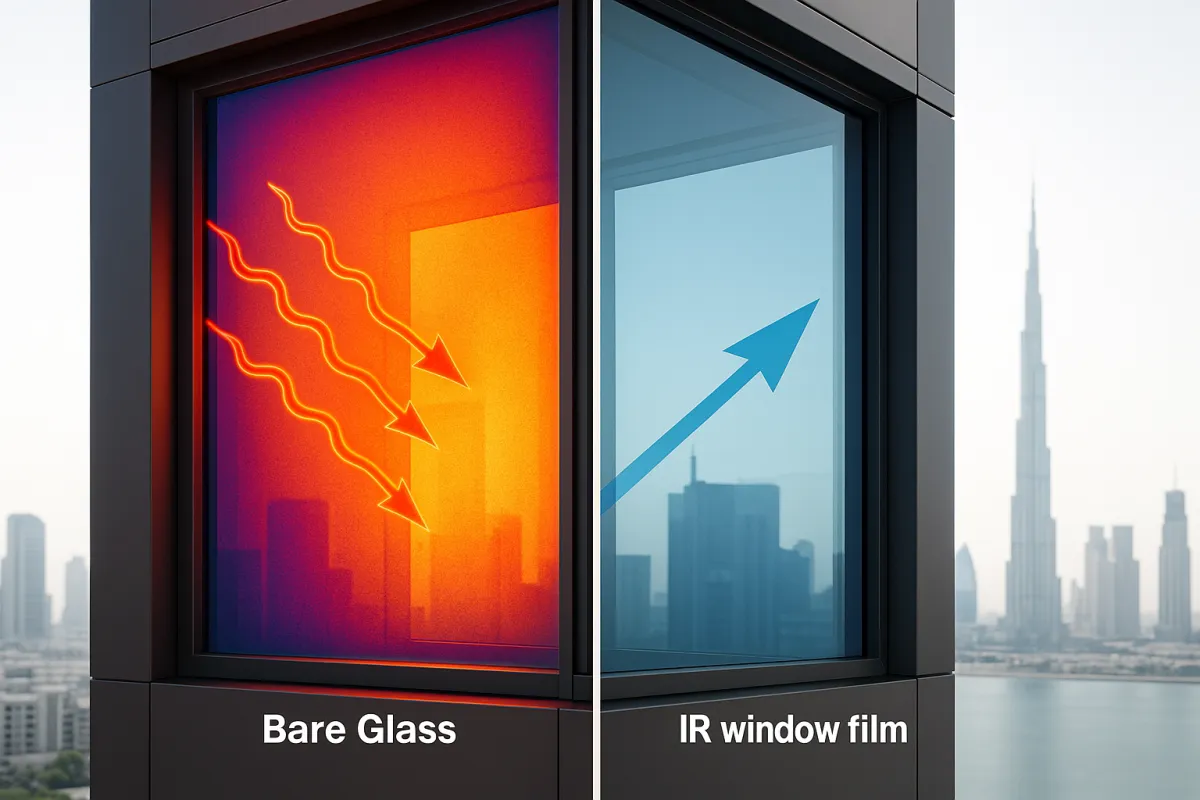
A double-glazed unit is two panes of glass sealed together with a gap between them. Window film works by reflecting and absorbing the sun's energy. When a darker or more absorbing film is fitted to the inside pane, more of that heat is held within the glass and the sealed unit. On a large window in full UAE sun, extra heat can increase stress on the glass and on the edge seal. That is why installers check the glass before recommending a film, rather than fitting the darkest film available.
Things we check on a site survey:
- Single or double glazing, and the glass type (clear, tinted, reflective, low-E, laminated or tempered)
- The size of each pane and which way it faces
- Whether the glass sits in direct sun for most of the day
- Any warranty from the window or glass supplier
- Shading from balconies, trees or nearby buildings
Interior vs exterior window film
| Interior film | Exterior film | |
|---|---|---|
| Where it goes | Inside face of the glass | Outside face of the glass |
| How it handles heat | Reflects and absorbs heat at the inner pane | Stops heat on the outer surface, before it enters the unit |
| Best for | Rooms, offices and partitions with moderate sun; most single glazing | Strong sun, skylights, tinted or reflective double glazing, facades |
| Durability | Protected from weather, usually the longer-lasting option | Exposed to sun, dust and cleaning; built with a tougher outer coating |
| Installation access | From inside, simple | Needs outside access; upper floors may need a lift or rope access |
Which Global films we use on double glazing
All figures below come from the Global technical data sheets and are for film on 6 mm single clear glass unless stated. Full data for every film is in our Global window film specifications table.
Exterior films
| Film | Light in (VLT) | Solar energy rejected | Look |
|---|---|---|---|
| Reflective Silver 15 Exterior | 14% | 85% | Silver mirror |
| Reflective Silver 20 Exterior | 19% | 81% (up to 88% on double glazing) | Silver mirror |
| Nichrome 20 EXT | 21% | 69% | Dark neutral metallic |
| SSF 55 Exterior | 53% | 57% | Medium, low reflection |
| SSF 70 Exterior | 69% | 48% | Light, low reflection |
Interior films often suited to double glazing
Lighter spectrally selective films reflect much of the sun's infrared heat while staying clear, so they keep rooms bright with no mirror look. SSF 70 Interior lets in 68% of daylight and rejects 55% of solar energy. SSF 50 Interior lets in 52% and rejects 61%. Whether an interior film is suitable for your particular glass is confirmed on the site survey.
What about safety film on double glazing?
Clear safety film is normally fitted to the inside face, where it holds broken glass together if the inner pane breaks. Clear safety films absorb little solar heat, so they are generally less of a concern on double glazing than dark solar films. See our safety window film Dubai page and the 12 mil clear safety film guide for test results.
Skylights
Skylights take the strongest sun of the day, and most in the UAE are sealed double-glazed units. For this reason we usually recommend exterior film on skylights. Read more in Skylight window film in the UAE: interior or exterior?
Cost
Exterior film usually costs more per square metre than interior film because the film itself is tougher and outside access takes more time. Prices are confirmed after a site survey. See our window film price guide for Dubai for typical ranges.
FAQs
Can you put window film on double-glazed windows?
Yes. The film type and side of the glass should be chosen for the glass, its size and how much sun it gets. On strongly sun-facing or tinted double glazing, exterior film is usually the safer choice.
Can window film crack double glazing?
Fitting the wrong film, usually a dark, highly absorbing film on the inside of large sun-facing glass, can increase heat stress on the glass. Checking the glass against the film maker's guidance before fitting is how installers avoid this.
Is interior or exterior window film better?
Neither is better everywhere. Interior film lasts longer and is easier to fit. Exterior film stops heat before it enters the glass and is the usual choice for skylights, facades and tinted double glazing.
Does window film work on low-E glass?
It can, but low-E glass already controls some heat, so the film choice must be checked for that glass. Tell us the glass specification if you have it.
How much heat does exterior film block on double glazing?
Global Reflective Silver 20 Exterior rejects 81% of solar energy on single clear glass and up to 88% on double glazing, according to the Global data sheet.
Get a free site survey
Elite Window Films installs directly in every emirate. Send us photos of your windows on WhatsApp or request a quote, and we will recommend interior or exterior film for each window.
Elite Window Films FZE
Business Centre, Sharjah Publishing City Free Zone, Sharjah
Phone and WhatsApp: +971 56 702 7879
Email: [email protected]
