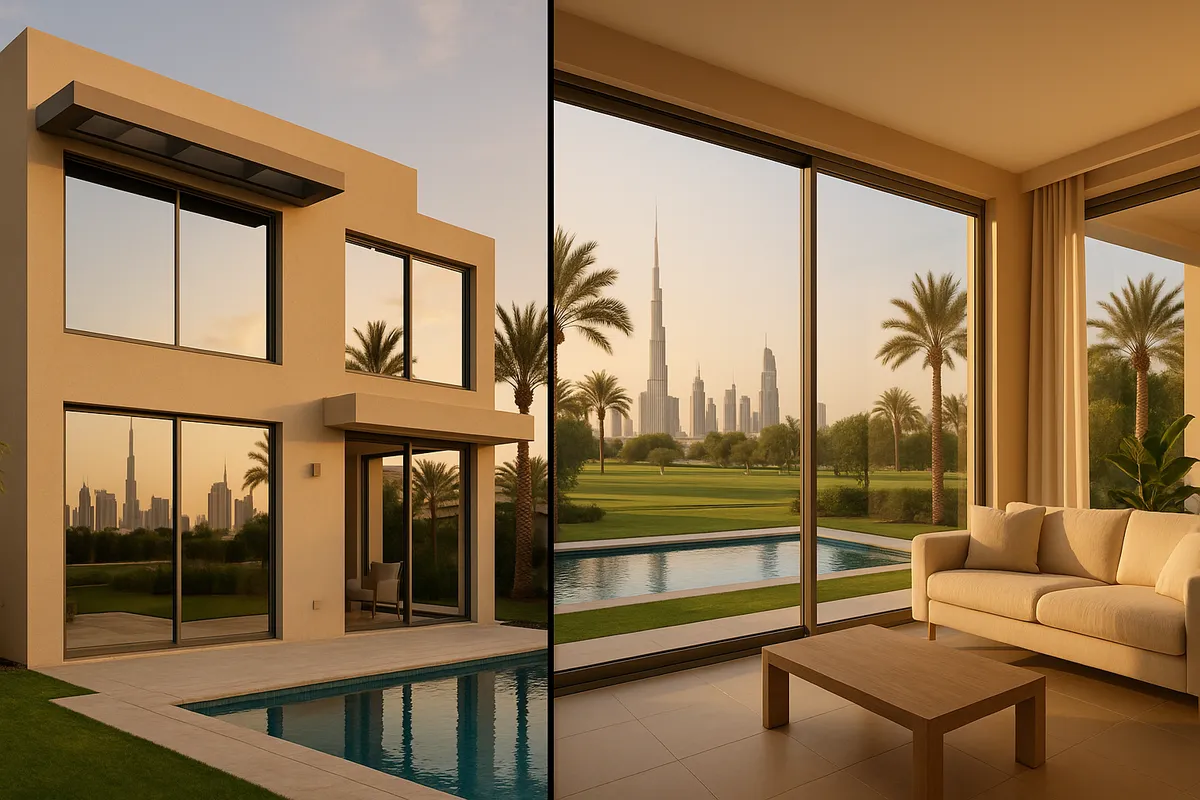
One-Way Mirror Film vs Frosted Film: Which to Choose
One-Way Mirror Film vs Frosted Film: Which Privacy Film Do You Need?
One-way mirror film gives you privacy only in daytime, when it is brighter outside than inside, and it keeps your view out. Frosted film gives privacy day and night, but it blurs the view in both directions.
So the right choice depends on when you need privacy and whether you want to see out. This guide compares the two for UAE homes and offices, and explains where each one works best.
How One-Way Mirror Film Works
Mirror film, also called reflective or one-way film, has a metallised layer that reflects light. The side with more light acts like a mirror. During the day, the outside is brighter, so people outside see a reflective surface while you can still see out.
At night the situation reverses. When your lights are on and it is dark outside, the inside is brighter, and people outside can see in. Mirror film gives privacy only when it is brighter outside. This is a limit of the physics, not of any one product.
Reflective films also reject solar heat, which is why they are common on villas and offices in the UAE. Examples in the Global range that Elite Window Films supplies include Reflective Silver 20, Reflective Silver 35 and Reflective Silver 15 Exterior, all described as giving daytime privacy. Dual Reflective Charcoal 05 has a mirror look outside and a dark grey look inside, and it rejects up to 82% of solar heat. Its darker inside face helps keep a clear view out at night, but it still does not stop people seeing in when your lights are on.
How Frosted Film Works
Frosted film is translucent. It lets daylight through but scatters it, so shapes and faces on the other side are blurred. Because it does not depend on light levels, it works the same way at noon and at midnight.
The trade-off is the view. You cannot see clearly through frosted film from either side. That is fine for a bathroom window or a meeting room wall, but not for a living room that looks onto a garden.
Frosted film is mainly a privacy and decoration product. Do not choose it expecting the heat rejection of a reflective solar film. If you need both heat control and privacy on the same glass, ask for the data sheet of the exact film before you decide.
Side-by-Side Comparison
| Feature | One-way mirror film | Frosted film |
|---|---|---|
| Daytime privacy | Yes, when it is brighter outside | Yes |
| Night-time privacy with lights on | No | Yes |
| View out | Clear in daytime | Blurred |
| Look from outside | Mirror | Matte, translucent |
| Solar heat rejection | Yes, varies by product | Not its main purpose |
| Natural light | Reduced, depending on shade | Passes through, diffused |
| Typical uses | Villa and office windows facing the street or sun | Bathrooms, office cabins, meeting rooms, partitions |
When to Choose Mirror Film
- Your main problem is heat and glare, and you also want privacy from the street during the day.
- You want to keep the view out, for example on villa living areas or office windows.
- The room is mostly used in daytime, or you are happy to close curtains or blinds at night.
Mirror film is a solar control film first. That makes it a good choice for sunny elevations in Dubai and Abu Dhabi. See our window tinting in Dubai page for the reflective and dual reflective films we install.
When to Choose Frosted Film
- You need privacy at all hours, such as bathrooms, bedrooms facing neighbours, or clinic rooms.
- You want to screen glass partitions, office cabins and meeting rooms without replacing the glass.
- You do not need a view through that glass, but you still want daylight.
For offices, frosted film is a common way to get privacy without new glass. For total privacy where no light should pass, blackout film is the alternative.
Can You Combine Them?
Yes, on different glass in the same building. A common approach is reflective or dual reflective film on outside windows for heat and daytime privacy, and frosted film on bathroom windows or internal partitions.
Applying two films on the same pane is not something to do without advice, especially on double-glazed units. Our surveyors check the glass type before recommending a film.
Cost and Warranty
Interior solar control film, which includes most mirror films, typically costs AED 95 to 150 per sqm installed in Dubai. Price depends on the film, the glass size and access. Frosted film is priced after a survey, based on the product and the area. For a full breakdown, read our window film price guide for Dubai.
Elite Window Films gives a written warranty of up to 10 years for interior films and up to 7 years for exterior films, depending on the product. Global film rolls are held in 48, 60 and 72 inch widths, which helps on large panes.
Frequently Asked Questions
Does one-way mirror film work at night?
No. With lights on inside and darkness outside, people can see in. Use curtains, blinds, or frosted or blackout film where you need night privacy.
Can I see out through frosted film?
Not clearly. You will see light and blurred shapes. If you need a view, mirror film may suit better for daytime use.
Which film is better for office partitions?
Frosted film is usually the better fit for meeting rooms and cabins, because it gives privacy whatever the lighting. Mirror film can work on partitions, but only from the brighter side.
Does frosted film reduce heat?
It is not designed as a heat control film. If heat is the main problem, a reflective or dual reflective solar film is the better choice.
Is there an option for total privacy?
Yes. Where no light or view should pass at all, blackout film is the alternative to frosted film.
How do I know which one to pick?
Think about when you need privacy and whether you need the view. Daytime privacy with a view points to mirror film. Privacy at all hours without a view points to frosted film. We can advise on site.
Talk to Elite Window Films
Elite Window Films FZE
Business Centre, Sharjah Publishing City Free Zone, Sharjah
Phone and WhatsApp: +971 56 702 7879
Email: [email protected]
